
Pipelines and terminals
Our pipeline network
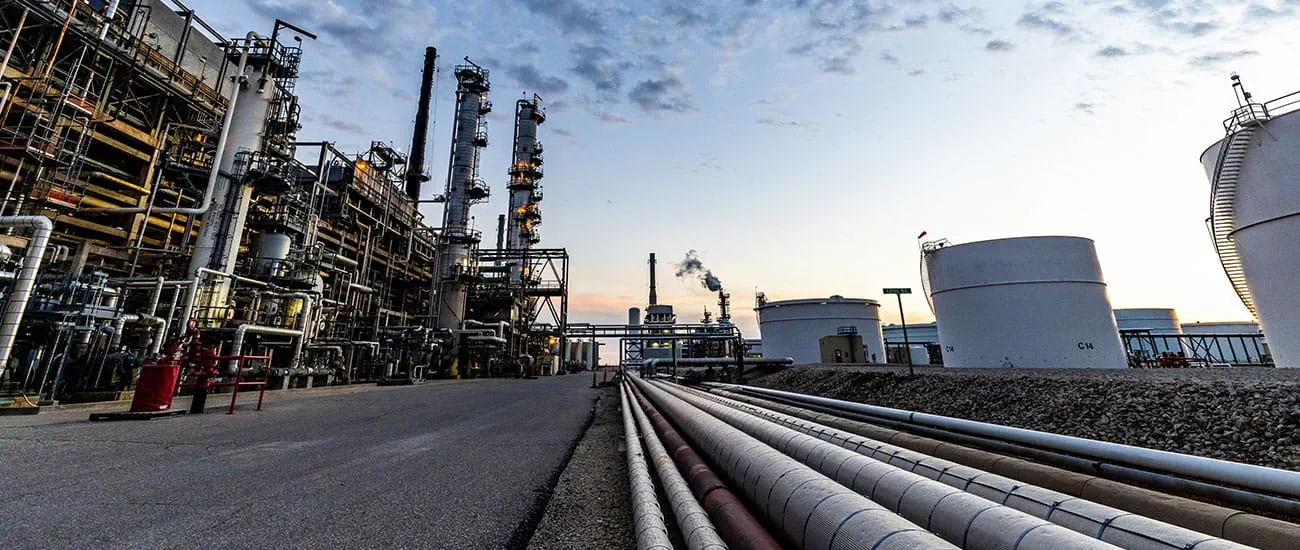
CHS fuels rural America’s energy needs as the nation’s largest cooperative refiner. Our refineries in Laurel, Mont., and McPherson, Kan., currently have a combined processing capacity of 175,000 barrels a day. To get crude oil to our refineries and safely move finished product to the marketplace, CHS taps into more than 2,000 miles of pipeline throughout the United States and Canada.
CHS pipelines cover more than 2,000 miles through Montana, North Dakota, Nebraska, Kansas, Oklahoma and Texas. Customers are connected to a dependable supply through our pipelines and CHS-owned refined product terminals, with a network of more than 250 third-party terminals, and finished product storage facilities.
Jayhawk Pipeline, LLC
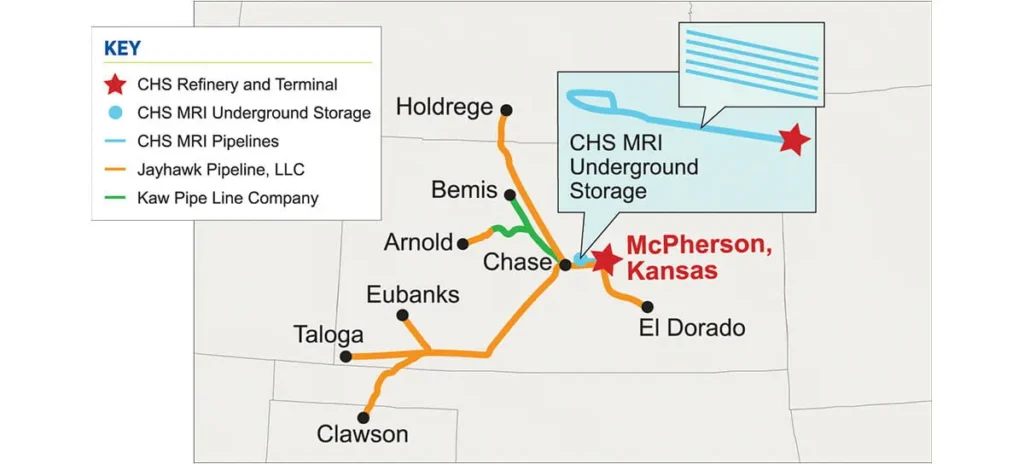
Headquartered in McPherson, Kan., the Jayhawk Pipeline transports more than 140,000 barrels of crude oil a day and is connected to all the major crude oil pipelines in Kansas. More than 70 employees safely operate more than 1,000 miles of regulated pipeline including Kaw Pipeline throughout Kansas, Nebraska, Oklahoma and Texas. Kaw Pipe Line Co. is owned by CHS Inc. and Southwest Pipeline Holding Company, LLC, and operated by Jayhawk Pipeline, LLC.
Tanks and pumping stations
Jayhawk Pipeline has storage facilities with locations in Taloga, Liberal, Eubanks, Hooker, Meade, Shurr, Holdredge, Laton, Chase, McPherson, Valley Center, and El Dorado. Jayhawk Pipeline uses multiple pumping stations located in Kansas to move crude oil through the pipeline. The facilities operated by Jayhawk on behalf of Kaw Pipe Line also have storage facilities in Bemis, Holtzinger, Roth and Susank.
Contact Jayhawk
For non-emergencies
Phone: 855-5-CHSPipe (855-424-7747)
For Jayhawk and Kaw Pipelines emergencies
Phone: 888-542-9575
Kaw Pipe Line Company
CHS whole owned affiliate.
Operated by Jayhawk Pipeline.
Contact Kaw
For non-emergencies
Phone: 855-5-CHSPipe (855-424-7747)
For Jayhawk and Kaw Pipelines emergencies
Phone: 888-542-9575
CHS McPherson Refinery Inc. Pipelines
The CHS McPherson Refinery Inc. Pipelines transport finished products, including natural gas liquids (NGL), butane, propane and gasoline between the McPherson Refinery and the Conway, Kan., underground storage facility.
Contact McPherson Pipelines
For non-emergencies
Phone: 855-5-CHSPipe (855-424-7747)
For Jayhawk and Kaw Pipelines emergencies
Phone: 888-542-9575
Cenex Pipeline, LLC
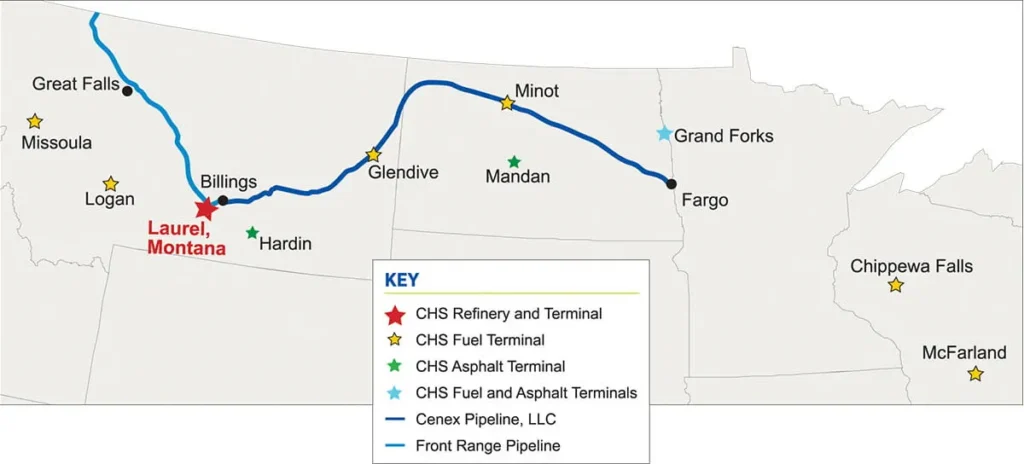
Headquartered in Laurel, Mont., Cenex Pipeline, LLC (CPL) transports an average of 43,000 barrels of refined products a day. It spans more than 773 miles across Montana and North Dakota.
Terminals
CPL transports refined petroleum products from refineries in the Laurel and Billings, Montana area to terminals in Glendive, Montana as well as Minot and Fargo, North Dakota.
Contact Cenex Pipelines
For non-emergencies
Phone: 855-5-CHSPipe (855-424-7747)
For Cenex and Front Range Pipelines emergencies
Phone: 800-421-4122
Front Range Pipeline, LLC
Headquartered in Laurel, Mont., Front Range Pipeline, LLC (FRPL) transports crude oil from the Canadian border to refineries in the Laurel and Billings, Mont., area. Front Range Pipeline transports more than 65,000 barrels of crude oil a day. Front Range Pipeline operates over 320 miles of pipeline throughout Montana.
Tanks and pumping stations
Front Range Pipeline has storage facilities with Montana locations in Laurel, Santa Rita and Cut Bank. Pumping stations are used to move crude oil through the pipeline.
Contact Front Range
For non-emergencies
Phone: 855-5-CHSPipe (855-424-7747)
For Cenex and Front Range Pipelines emergencies
Phone: 800-421-4122
Pipeline safety and sustainability

Pipeline safety at CHS
Pipelines are the safest and most efficient way to transport crude oil, natural gas and petroleum products, according to the National Transportation Safety Board. At CHS, we use pipelines to safely deliver crude oil to our refineries and ensure a reliable supply of energy products for our farmer-owners.
Our commitment to safety
Safety is at the core of everything we do. CHS is committed to protecting our employees, the public, and the environment through:
- Routine maintenance and inspections: Our pipelines undergo regular inspections and maintenance to meet strict operating standards. They are clearly marked with safety and contact information to raise public awareness.
- Integrity management program: We use advanced internal inspection tools to detect corrosion, cracking, and dents. Repairs are made based on this data, following government regulations and sound engineering practices.
- Safety management system (SMS): This framework guides our operations by helping us identify and manage risk, setting clear safety goals, identifying and mitigating hazards, ensuring regulatory compliance and driving continuous improvement.
Community partnership
We believe in partnering with those who live and work near our pipelines. CHS is committed to sharing important safety information and being prepared to respond in case of an emergency.
What can you do to help prevent a pipeline emergency?
Visit the National Pipeline Mapping System to view maps of pipelines in your community and get emergency contact information for operators.
Call the pipeline operator if you see unauthorized excavation activities that could endanger a pipeline or above-ground pipeline facility, or if you notice that a pipeline is exposed due to erosion or excavation near the site.
Follow best practices for safe excavation and enforce state 811 One Call laws.
Responding to a pipeline emergency
A few key tips can help protect your community in the event of a pipeline emergency, including:
- Call 911 to contact emergency responders immediately.
- Secure the area around the leak by evacuating the public from homes, businesses, schools and other locations.
Consider erecting barricades to control access to the emergency site, or taking other, similar precautions. - If the pipeline leak isn’t burning, take steps to prevent ignition. This includes prohibiting smoking, rerouting traffic, and shutting off the electricity and residential gas supply.
- If the pipeline leak is burning, try to prevent the spread of fire but do not attempt to extinguish it. Burning petroleum products will not explode. If the fire is extinguished, gas or vapor will collect and could explode when reignited by secondary fires.
- Contact the pipeline company as soon as possible. Pipeline marker signs show the pipeline company’s name, emergency telephone number, and pipeline contents.
Special information
Farmers and ranchers
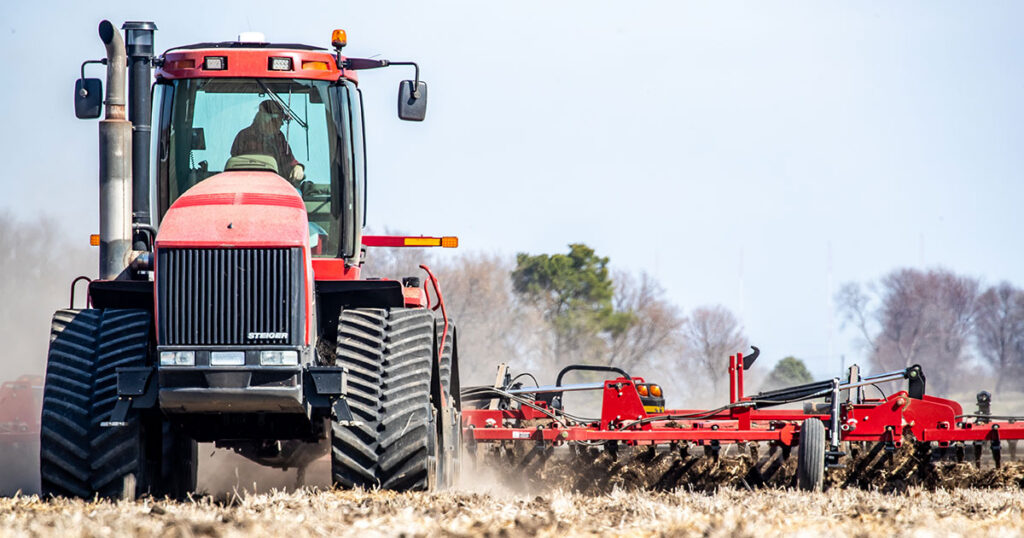
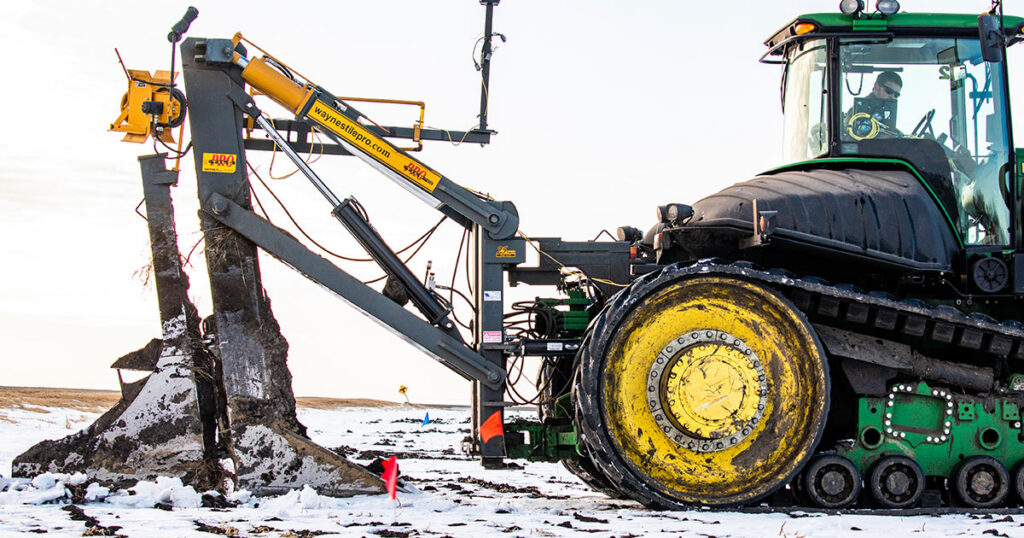
The majority of pipelines are located beneath farmland. Accidentally striking a pipeline can…
Excavators
According to the National Transportation Safety Board, excavation and construction are the greatest single cause…
Public officials and first responders
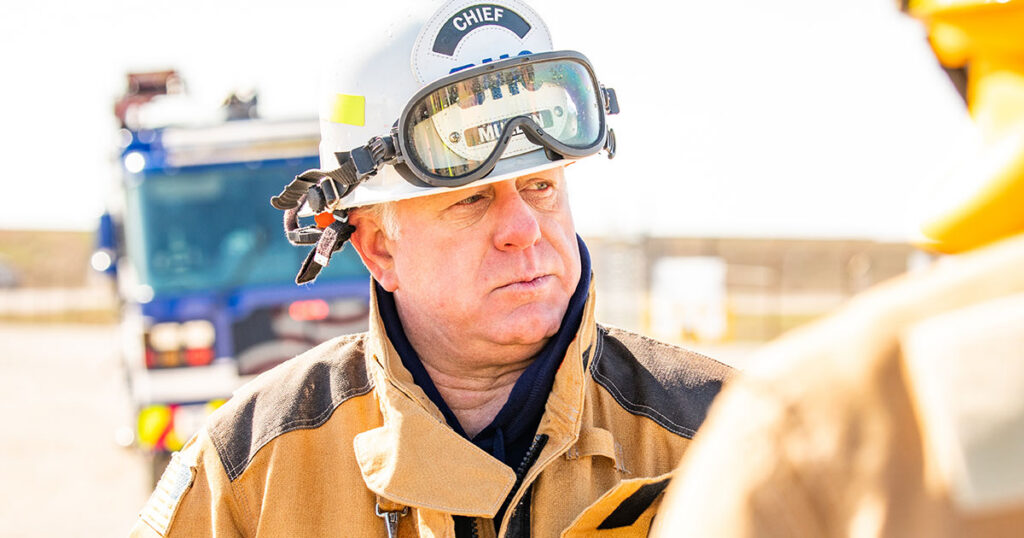
Public safety officials and emergency response agencies must be able to quickly and correctly…
Schools
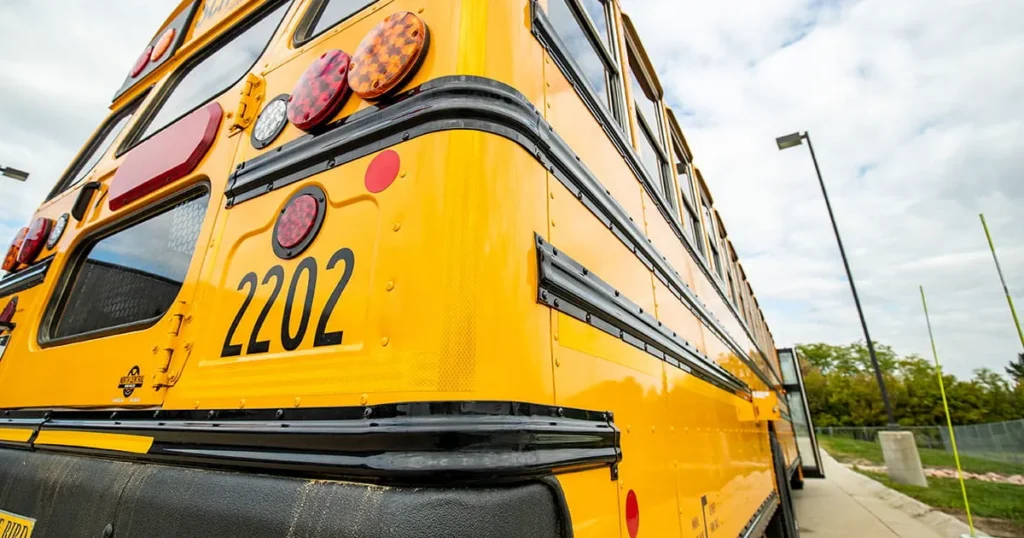
Approximately one in every 20 schools in the United States is located within a half mile of an underground petroleum…
Contact us
Emergency
Cenex and Front Range Pipelines
CHS MRI Pipelines
(Conway)