
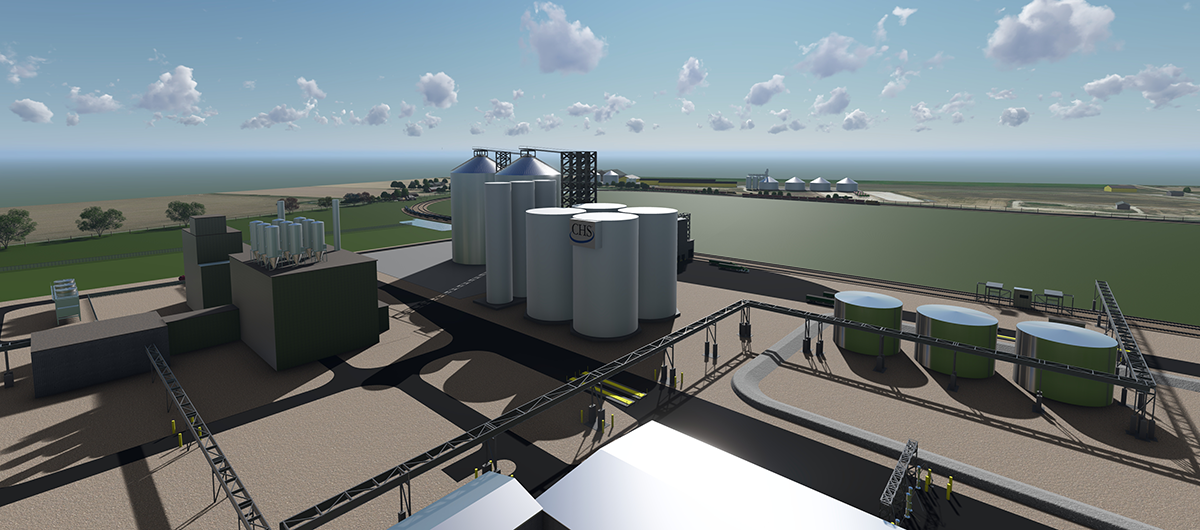
Expanding U.S. soybean processing to meet growing demand
CHS soy crush at Evansville, Wis.
The project
CHS is building a new soybean processing facility near Evansville, Wisconsin, expanding its oilseed processing network to create additional market opportunities and long-term value for owners while meeting growing demand for soybean oil and meal. Located in southern Wisconsin, a region with strong soybean production and significant demand for soybean meal from livestock producers, the Evansville facility will fill an important gap in local processing capacity.
The location also offers strong access to domestic and global markets via rail, river and road. As a farmer-owned cooperative, CHS is investing to connect U.S. farmers to growing domestic and global markets, for food, livestock feed and renewable fuels.
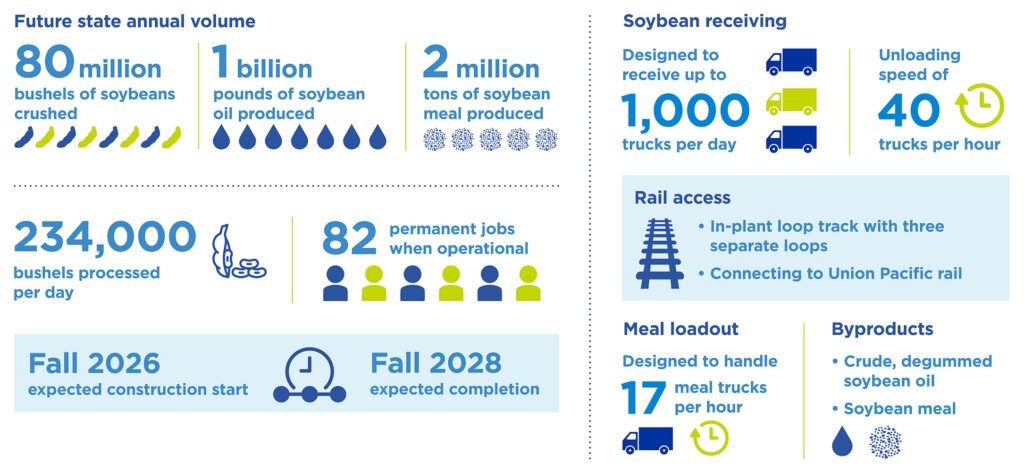
CHS soy processing at Evansville by the numbers
Strengthening the CHS processing network
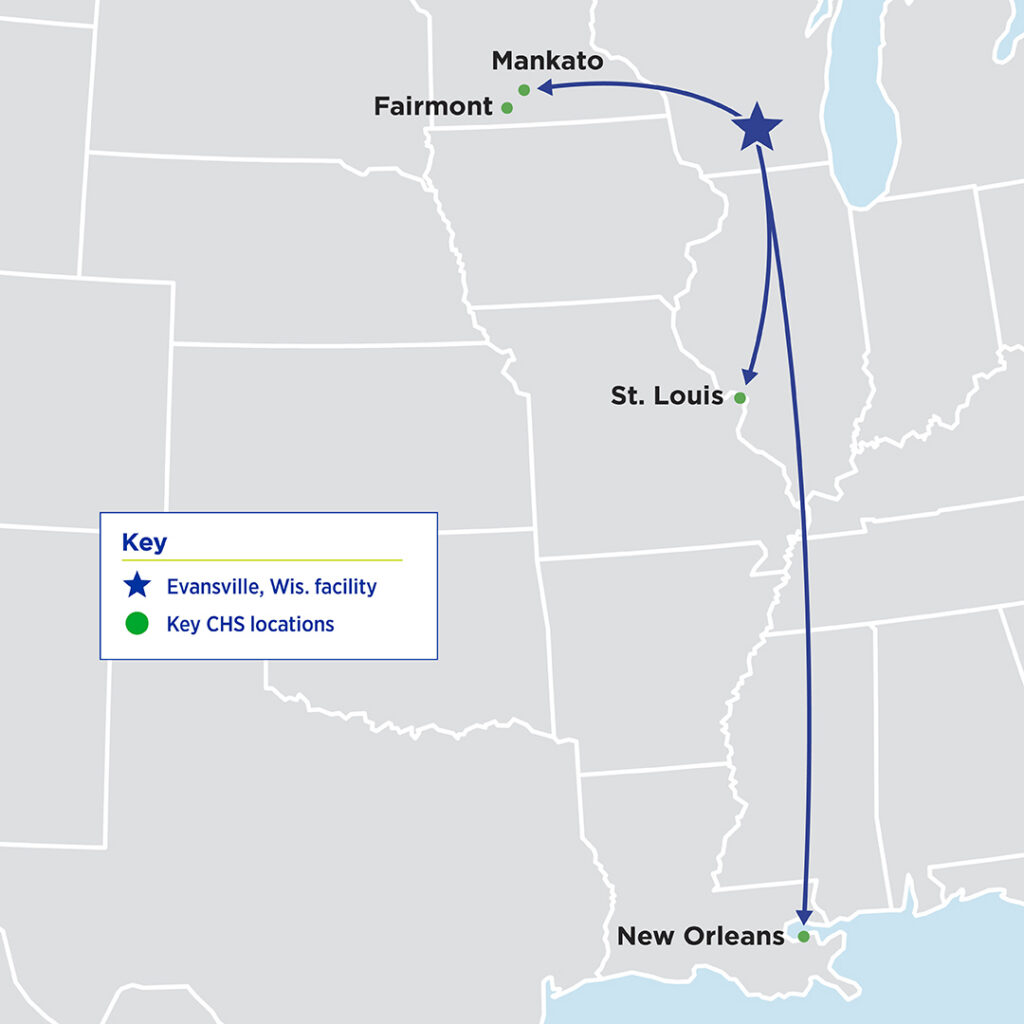
The Evansville facility complements the company’s existing soy processing operations at Fairmont and Mankato, Minnesota. Together, those two facilities currently process approximately 119 million bushels of soybeans annually. When the Evansville facility becomes operational, CHS soybean processing capacity will increase by approximately two-thirds.
CHS has made recent investments across its processing and supply chain network, including:
- Expanded crush capacity at Fairmont (2023) and refining capacity at Mankato, Minn. (2024)
- Expanded the CHS export terminal near New Orleans in Myrtle Grove, La. (2025)
- Added CHS grain terminal near St. Louis, in Cahokia, Ill. (2026)
Committed to community and economic impact
The Evansville facility is expected to create approximately 80 new, permanent U.S. jobs with competitive wages and benefits. During the 24–30 months of construction, the project is expected to support an average of 250 contractors and skilled laborers, with up to 400 at peak, all contributing to the local economy. CHS is committed to being a long-term partner in the communities where it operates, supporting economic vitality, job creation and growth across the agricultural value chain.
Why southern Wisconsin
Evansville is well positioned to support efficient soybean processing because of its:
- Strong local soybean supply from area farmers and cooperatives
- Significant demand for soybean meal from regional livestock producers
- Access to Union Pacific rail, river and road transportation corridors
- Proximity to affiliate cooperatives serving the region

FAQs about the project
CHS expects to invest approximately $700 million in the Evansville soy processing facility. This long-term investment supports expanded soybean processing capacity, creates new market opportunities for growers and strengthens the agricultural economy in the region.
The facility will have capacity to process 234,000 bushels per day, or 80 million bushels annually, producing approximately 1 billion pounds of oil and 2 million tons of meal.
When complete, the project is expected to create approximately 80 new, permanent U.S. jobs in the region. For the 24-30 months duration of the project, the site will rely on an average of 250 U.S. contractors and laborers, including 400 at peak, all contributing to the local economy.
Evansville was selected after extensive internal and third-party evaluation of numerous potential locations across the Midwest. The location offers:
- strong supply of soybeans and a gap in soy processing capacity in southern Wisconsin
- local meal demand from livestock sector
- access to domestic and global markets via rail, river and road
- cooperatives in the area
U.S. soybean crush capacity has expanded by 24% since 2022, driven by substantial demand for domestic feedstocks for renewable fuels. Soybean oil demand has shifted significantly toward fuel production, and global biomass-based diesel demand continues to accelerate. State and federal policy support for biofuels provides clear market signals for this expansion.
The facility will process conventional soybeans from Wisconsin and surrounding regions, with the capability to process 234,000 bushels per day. The facility design includes soybean unloading speed of 40 trucks per hour and up to 1,000 trucks per day.
The facility will have access to domestic and global markets via rail, river and road. Soybean oil is expected to serve renewable fuels markets and the CHS refinery in Mankato, Minn. Meal will serve livestock feed markets both locally and regionally.
The project represents a significant long-term investment in Wisconsin agriculture and infrastructure. The facility would strengthen a soybean value chain that already contributes hundreds of millions of dollars annually and supports more than 1,200 jobs across Wisconsin’s second and third congressional districts.
Sources: United Soybean Board, NOPA and Wisconsin Soybean Marketing Board
CHS has worked with Wisconsin DNR, the EPA and local Wisconsin regulators to ensure that air quality and safety standards are met. The project supports the growth of renewable fuels that reduce overall transportation sector emissions.