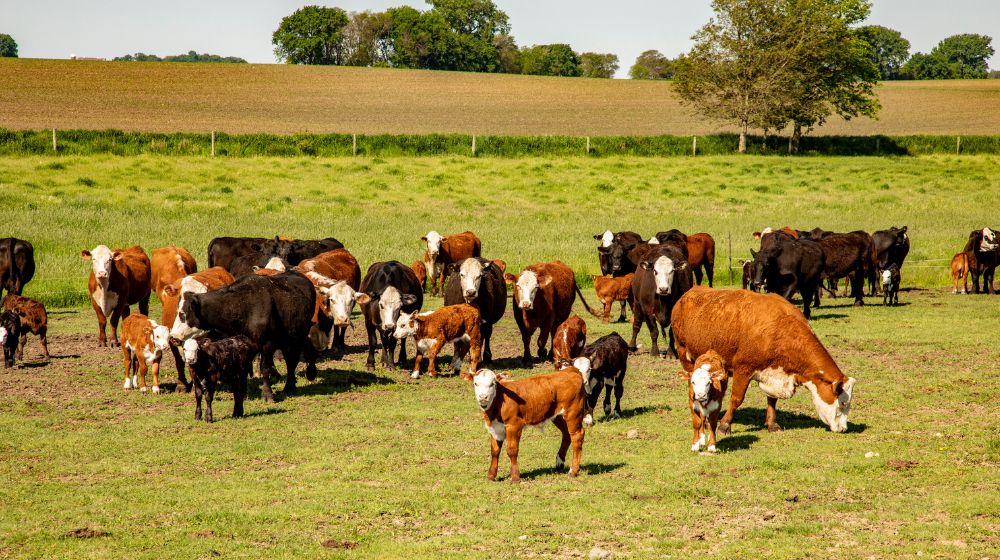
Weather conditions can vary widely from one area to another, affecting forage production and the quality and availability of feed and water. Some areas have received timely moisture while others remain dry, and after a cool start to summer, temperatures have risen quickly. With so many variables, it is important to plan for a range of feeding scenarios. Having a Plan A, B, C and even D can help avoid costly surprises later.
Don’t overlook hay quality
Last year’s rainfall made harvesting high-quality hay difficult. While yields were high in many areas, producers struggled to bale hay at the proper moisture level, resulting in mold and mycotoxin concerns. Carryover hay and uncovered silage may also have deteriorated further over time.
Before feeding, consider testing or retesting stored forage. Hay analysis is an inexpensive management tool that can help reduce the risk of abortions, respiratory issues and other health problems during feeding season.
Sweet clover considerations
Yellow sweet clover can be an excellent forage when grazed early, but caution is needed when baling. If hay is put up too wet and becomes moldy, it can produce dicoumarol, a compound that interferes with blood clotting and can become fatal in severe cases.
Testing suspect hay for dicoumarol is recommended. Processing or grinding sweet clover hay can help improve intake and digestibility.
Grain hays and nitrate risk
With drought-stressed conditions, more grain crops may be harvested for feed this year. Grain hays generally offer the best feed value when harvested early in the milk stage. As maturity increases, forage quality declines and additional supplementation may be needed to meet nutrient requirements.
Producers should also be aware of nitrate accumulation, particularly in grain hays and drought-stressed corn. While ensiling can reduce nitrate levels, nitrates are cumulative across the entire diet. Elevated levels can lead to abortions, reduced fertility, tissue loss in extremities and, in extreme cases, death.
Testing remains the best way to assess risk before feeding.
Water quality matters
Water quality is often overlooked but plays a major role in herd health and performance. Producers relying on surface-water sources, including dugouts, dams, creeks and rivers, should monitor both water quantity and quality throughout the season.
Watch for common concerns such as:
- High total dissolved solids (TDS)
- Elevated sulfate levels
- Algae blooms
- Bacterial contamination
Also, verify that calves can access water sources, especially when tank levels fluctuate after larger cattle have watered.
Final thought
As feeding season approaches, evaluating forage inventories and water sources now can help prevent costly challenges later. Feed and water testing are relatively inexpensive investments that provide valuable information for making sound nutritional and management decisions. A little preparation today can save significant headaches tomorrow.