Over the last six years, U.S. grain storage capacity hasn’t kept up with the increases in crop production. That has caused bottlenecks at local and regional elevators, and some grain quality issues as bushels are moved across the country for both domestic use and export.
Between 2000 and 2019, U.S. grain bin capacity grew at a similar pace to crop production levels, increasing by an average of 349 million bushels per year, according to USDA National Agricultural Statistics Service data. But over the last six years, only 337 million bushels of new storage have been built. At the same time, average corn yields have increased from 171.4 bu. in 2020 to 186.5 bu. in 2025. Last year’s bumper corn crop, an all-time high of 17 billion bushels, compounded the storage problem.
At the same time, total U.S. grain exports have slumped since the highs reached in 2020 and domestic grain consumption, while continuing to trend higher over the last five years, hasn’t kept pace with the productivity of U.S. farmers.
“Speed and space are the most valuable commodities for grain handling,” says Kent Mulder, CHS vice president of operations. “CHS works to be as efficient as possible, from farm to export, so we are always looking for ways to improve facilities and infrastructure.”
The deficit of grain storage has become challenging in many parts of the country and, Mulder notes, the recent shift from less wheat to more corn acres in some Plains states has contributed to that trend in some areas. “We’re always evaluating our assets and supply chain. Our goal is to identify areas with the greatest need for more storage and system updates, based on local crop production trends and expected growth. Then we work with strategic transportation and financial partners to make investments in more and better storage, with more efficient handling facilities to benefit our farmer-owners.”
Faster handling, more flexibility
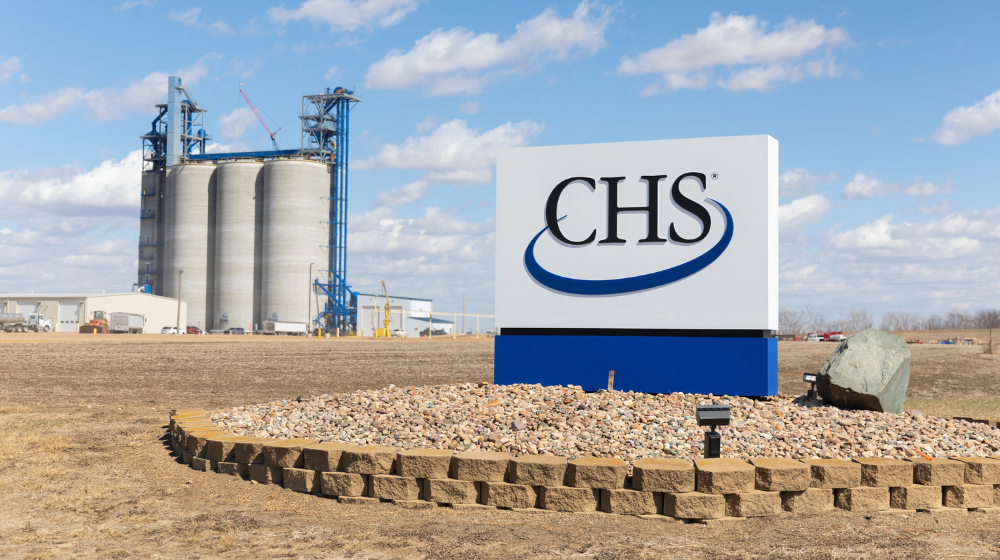
One such project completed in early 2025 is a 1.1-million-bushel storage system at the Worthing, S.D., grain terminal and agronomy center operated by the CHS business unit based out of Brandon, S.D. Located along Interstate 29 in the southeastern corner of the state, the facility features a new six-bin concrete structure standing 140 feet tall. It was built using the continuous slip-pour method over six consecutive days. Along with two existing 2-million-bushel bunkers, the new bins bring total storage to more than 5 million bushels on site.
The addition of a new rail loop and streamlined train loading process enable the cooperative team to load a 450,000-bushel shuttle train in as little as six hours, says Ben Lyden, senior director of operations in that area. “That’s more than twice as fast as we were loading shuttles at our older Canton facility nearby.”
That significant increase in speed gives the cooperative more wiggle room to meet often tight railcar loading windows when loading shuttles headed to Pacific Northwest or Gulf export terminals, he adds. “Greater flexibility allows for more predictable team schedules and happier employees.”
Having a state-of-the-art shuttle system, along with three other shuttle facilities that Lyden manages in the area, offers the team greater flexibility to get empty trains where they’re most needed during the busy fall season. “Through continuous improvement initiatives over the past few years, we are working closer with CHS grain traders and transportation specialists to more easily make rail changes that help us continue to move grain out and keep our facilities open and serving our owners and customers.”
A second scale and additional 60,000-bushels-per-hour receiving capacity more than doubles the previous receiving volume at the Worthing facility, which translates to shorter farmer wait times when delivering grain. “Once a truck reaches the scale, we can have it unloaded and the driver back on their way in 15 minutes or less,” says Lyden.
Staying open and competitive
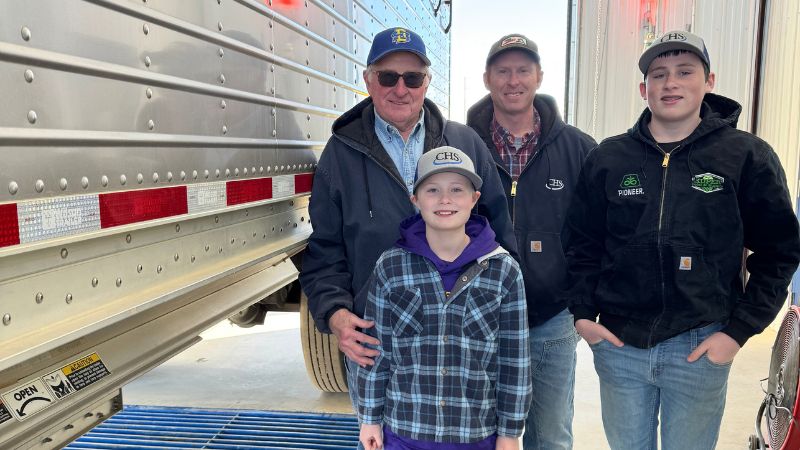
Faster unloading has been a popular benefit for local farmers, including Jonathan Hagena of Lennox, S.D., who also serves on the local CHS producer board. “The improved flow through the expanded facility is great, especially during harvest. Last fall we had the biggest corn crop ever in this part of the state and it was a real test. When the local ethanol plants were full and many other elevators couldn’t take any more grain, the Worthing facility helped to keep a lot of farmers going. They were able to move out five shuttle trains in October and rarely had to stop taking grain.”
He says the additional storage and grain handling upgrades, combined with the existing agronomy center, makes Worthing a full-service ag hub that will serve area growers well into the future. “One of the reasons I chose to serve on the cooperative board was to ensure the infrastructure was in place to allow my sons to continue to farm, if they want to. This facility is an important investment in farming’s future here.”
Grain expansion delivers benefits
Construction of the CHS grain terminal expansion at the Worthing, S.D., site took one and a half years, from groundbreaking to receiving the first load of corn. Michael Van Otterloo, a former operations manager at the cooperative and now construction project manager, helped keep things moving. “This project can be used as a template for future CHS grain expansion projects, which would help to save time and money,” he says. “We were able to work within our budget, stay on the construction schedule and get great visibility for the project because we were located along the interstate.”
When completed in January 2025, the project began delivering key benefits to local farmers. It allows CHS to:
- Receive up to 110,000 bushels of grain per hour (double the previous rate)
- Unload 40 to 50 trucks per hour
- Store more than 5 million bushels of grain (a 20% increase)
- Hold 330,000 bushels of wet corn
- Dry 7,500 bushels of corn per hour (no previous drying capacity)
- Load out 80,000 bushels per hour (no previous loadout capacity)
- Fill a 450,000-bushel shuttle train in 6 hours (more than twice as fast as before)