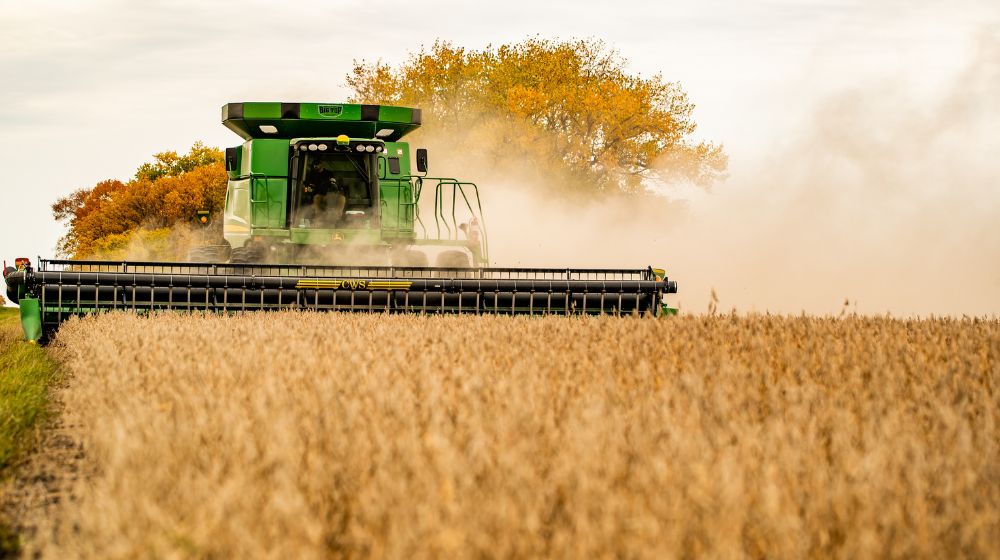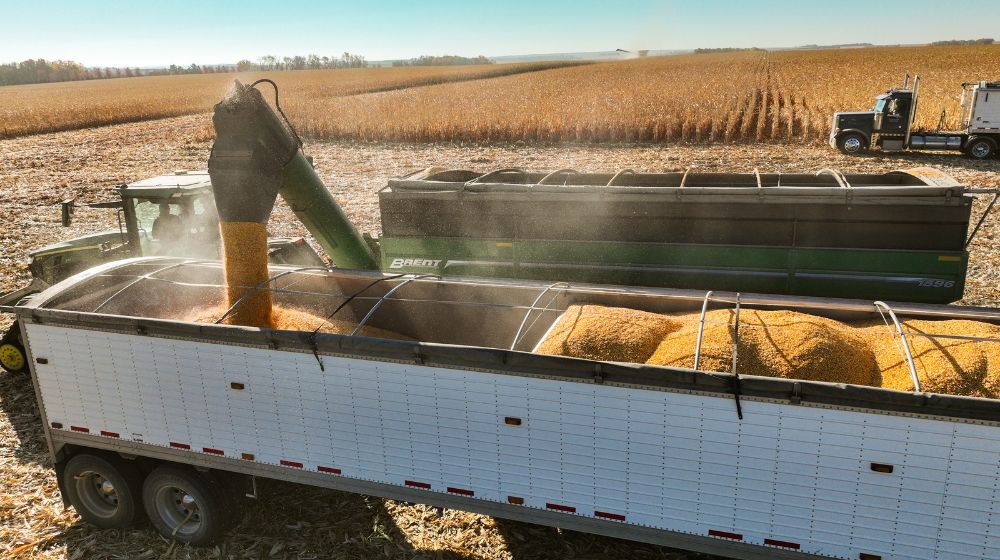
Last fall’s record U.S. corn crop of 17 billion bushels was a real achievement for farmers but quite a challenge for everyone who moved all those bushels through the supply chain to end users.
The good news is that CHS has been planning for that kind of challenge for years, says Jackie Bailey, senior vice president of transportation. “CHS has a strong delivery network, and our team has been working to standardize transportation processes for rail, barge and trucks.
“In the case of grain, we move it to our processors for milling or crushing, to the domestic livestock feed market, to ethanol plants and to ports for export around the world,” she says. “The challenge is to move it safely and as efficiently as possible to provide value for our cooperative and its owners.”
To accomplish that, the transportation team has taken a holistic approach to supply chain issues, explains Justin Cauley, vice president of transportation sourcing and planning for CHS. “That starts by understanding all the details of everything from what’s happening on the farm that could slow harvest to what’s happening on the river that could impact barge loading and movement. Then we use and share all that information to make sure we have the trucks and railcars where they’re needed most to keep grain moving towards rivers and ports.”
Adjusting to market changes
But even the best-made plans can be upended by unforeseen events. For example, this year’s particularly strong El Nino weather event is resulting in less rain and lower water levels in the Panama Canal, explains Cauley. “That means fewer vessels are being allowed to pass through it each day, causing backups. The alternative route is for vessels to go down around South Africa’s Cape of Good Hope, which for many is a significantly longer trip with higher fuel costs.
“There has also been a lot more demand for tankers of fuel products transiting through the Panama Canal due to ongoing geopolitical conflicts,” he says. “That has slowed grain shipments out of the Gulf and widened the spread between shipping out of New Orleans versus the Pacific Northwest (PNW). As a result, we might be seeing more grain from Midwest locations, such as Illinois, for example, being shipped to the PNW by rail versus barging it down the river to New Orleans. CHS has the scale and flexibility to find the most economical routes.”
Recent trade shifts also include a decline in soybean purchases from China, which drives fluctuations in the number of shipments into and out of export facilities, particularly in the PNW. “Our rail capacity is flexible enough to accommodate changes like that,” says Monica Freeman, director of rail transportation for CHS.
Cropping shifts can also impact transportation planning, she notes. “In recent years we’ve seen less wheat produced and more corn in parts of the country. Since corn crops yield more volume than wheat, we need to plan for moving higher grain capacities from those areas.”
Expanding supply chain access
To be nimble in responding to global market forces, CHS is always looking for ways to increase access to key supply chain streams. The merger of Canadian Pacific and Kansas City Southern railroads in 2023 offered one such opportunity, providing new access into Mexican markets, which CHS has tapped into, says Freeman. That same year CHS expanded its TEMCO joint venture to include an export terminal at the Port of Houston in Texas. “With consistent access to an export facility in Houston, CHS has significantly increased the number of grain shuttle trains it exports from there,” she says.
Another recent development she is excited about is the company’s expanded presence on the Mississippi River at Cahokia, Ill. Early in 2026, CHS assumed operations of a grain facility that offers year-round access to the St. Louis Harbor and direct connections to all six North American Class I railroads. With more than seven miles of private on-site rail track and capacity for four-unit trains, the site handles high-speed rail and truck-to-barge loading of grain and grain byproducts.
“This site gives CHS access to multiple railroads, which helps us seek out more competitive rail pricing for our customers,” says Freeman.
For barge shipments, the Cahokia facility provides access to the Mississippi River and is now the southernmost point of barge origination for CHS, notes Ben Doane, trader and lead barge freight sourcing and execution specialist. “We’re now able to transfer corn, soybeans and soybean meal from rail or trucks to barge, all within our own system. As a result, barge loading at the facility has increased. This location, along with the acquisitions in 2024 of elevators at Morris and Seneca, Ill., along the Illinois River, are helping to create value for our cooperative and its owners.”
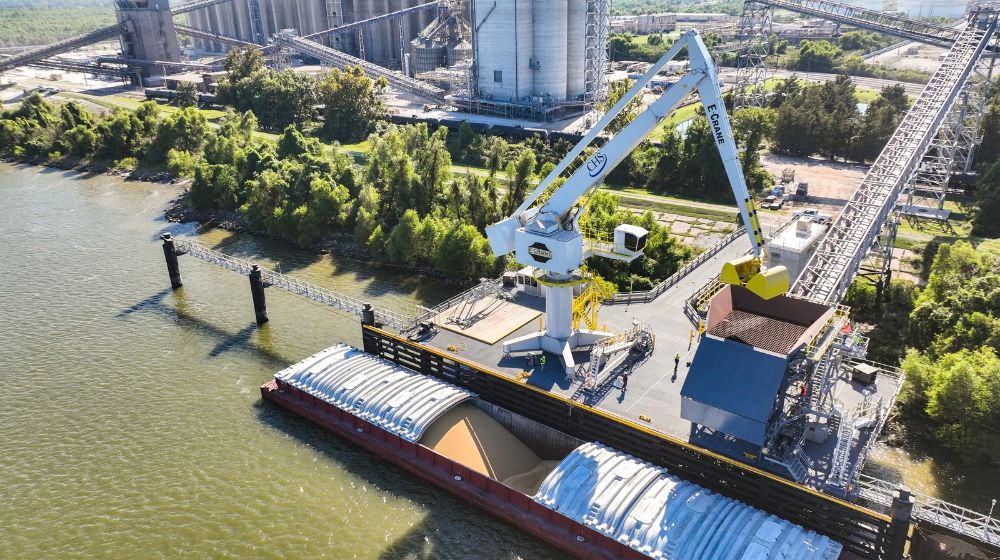
CHS has also invested significantly in its grain export infrastructure in the Center Gulf. In May of 2025, CHS completed a major renovation and expansion of its grain export facility in Myrtle Grove, La., that is designed to move 30% more bushels of corn, soybeans and wheat. In addition to increased storage, a new bulk weighing and grading system with three grain flows allows multiple commodities to be loaded onto oceangoing vessels, as well as for the handling of more soybean meal and distillers dried grains with solubles (DDGS). A new E-crane, dedicated to loading grain exports, is electric-powered to reduce energy costs and improve efficiencies.
Valuing relationships
“Cultivating and maintaining strong relationships with major transportation service providers in all modes is a critical piece of our success as a company, as well as being at the heart of what it means to be a cooperative,” says Bailey. “It gives us the flexibility to tap into capacity, adapt to changing market dynamics and continue delivering for our owners and customers.”