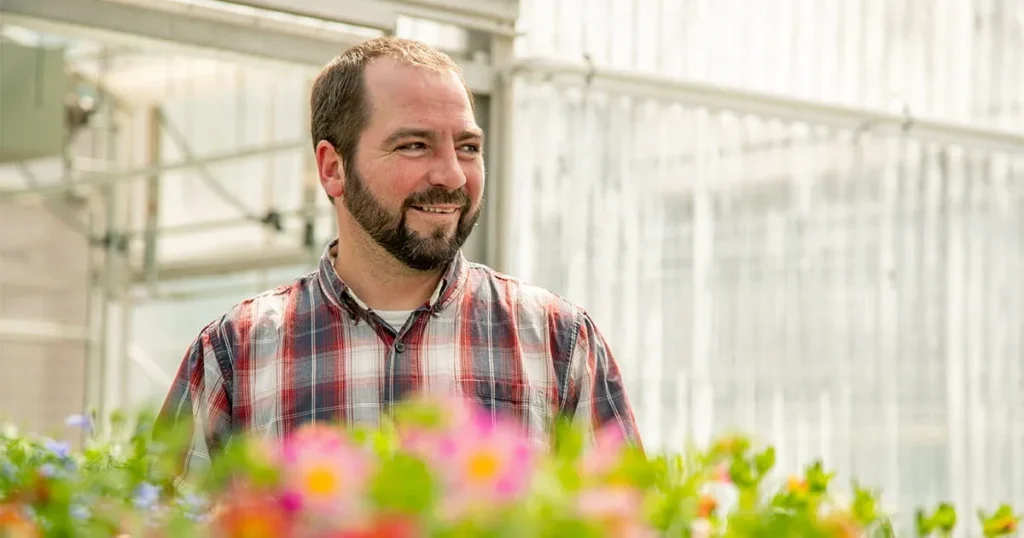
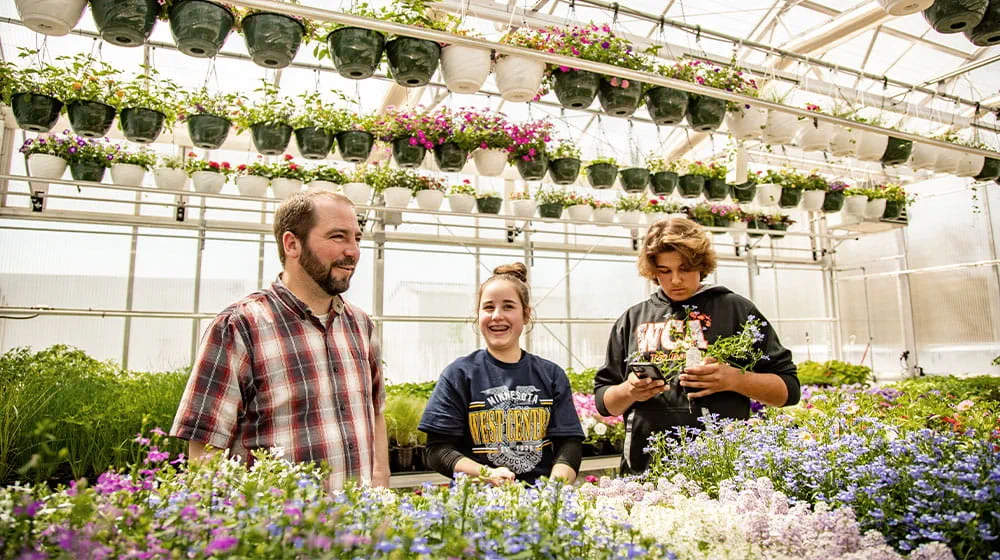
When agricultural educator Eric Sawatzke envisioned adding a greenhouse at West Central Area High School in Barrett, Minn., he pictured a small space where students could perform simple plant science activities, such as seeding and transplanting.
His dream blossomed into something much bigger after he made two decisions: He would empower students to make fundraising presentations and the plan would include raising food for charity.
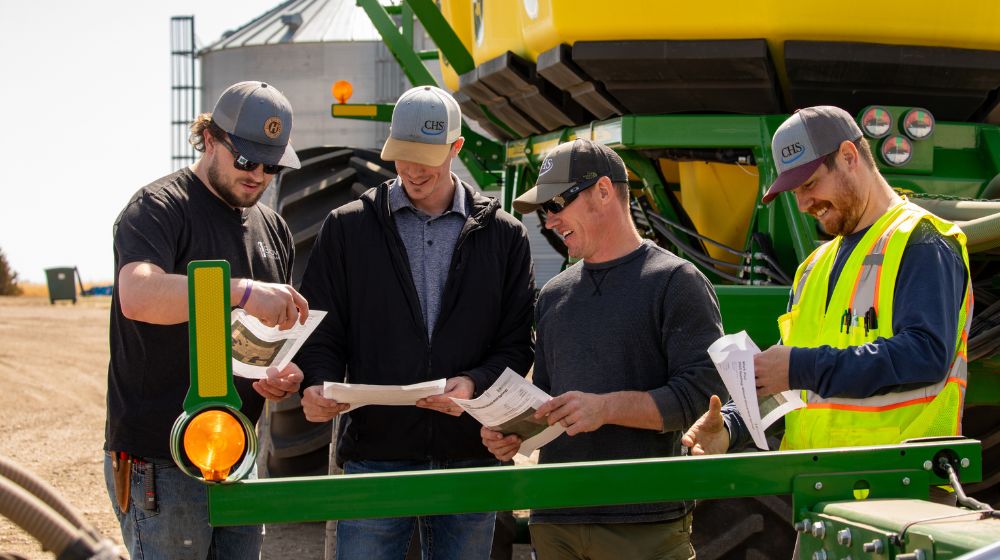
Eric Sawatzke, ag instructor at West Central Area High School in Barrett, Minn., collaborated with his local CHS ag retail location to secure a CHS Seeds for Stewardship grant for a school greenhouse, with the added bonus of giving high school students on-farm planting and harvesting experience.
“As the students talked about what the greenhouse would mean to them, the whole community got excited and stepped up,” says Sawatzke. “I am so grateful others believed in this project as deeply as we did.”
Because the plan included raising vegetables and fruits for local food shelves, the greenhouse program qualified for hunger project grants from unconventional partners such as Lions Club International. Combining community and grant support, the school raised more than $375,000 to build the facility.
Breaking barriers
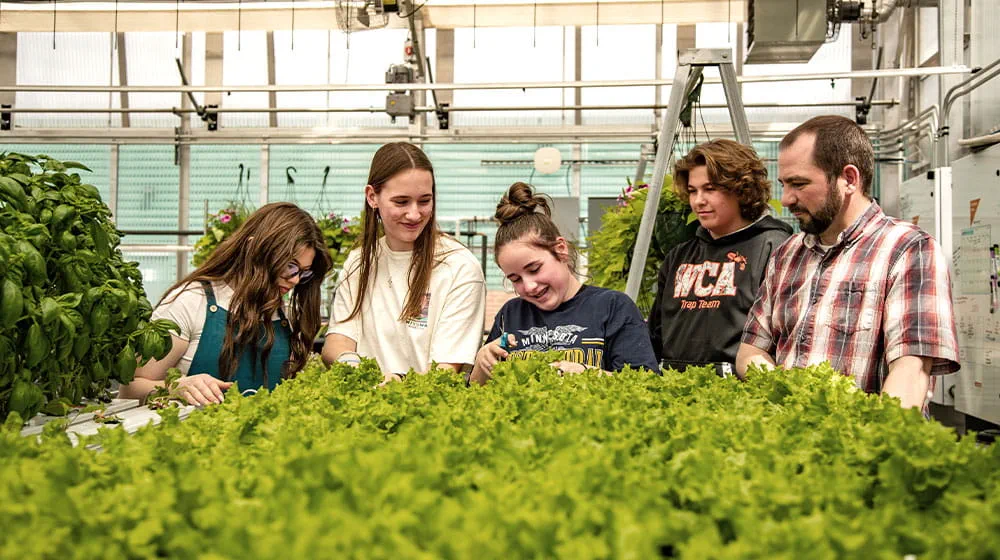
Today the greenhouse provides a hands-on learning environment, supplies fresh produce for people in need and serves as a community education center where agronomists conduct tests on planting depth, cold stress and more.
It’s also a revenue generator. “This year, we sold 9,000 plants at our plant sale and brought in more than $16,000,” says Sawatzke.
The funds reduce costs for students participating in FFA events, he explains. “We’re removing socioeconomic barriers.”
Based on the greenhouse program’s success, the community and nonprofit organizations including USDA have helped the school fund a mobile meat trailer where students learn about meat cuts and grading.
While the results are remarkable, Sawatzke is convinced other communities can meet their own needs with similar creative approaches and collaboration. “These projects are totally replicable in other towns if you get the right players involved.”
Find out information on CHS Seeds for Stewardship matching grants.