

October is National Co-op Month. It’s a time to celebrate the value cooperatives provide to their members and rural communities.
CHS is the nation’s leading agribusiness co-op and proud to be part of the cooperative system. For generations, co-ops have been a trusted, proven business model built on the principles of collaboration, democracy, economic participation and social responsibility.
Learn more about the cooperative system and CHS.
What is a cooperative?
A cooperative is defined by USDA as a user-owned and controlled business from which benefits are derived and distributed equitably on the basis of use or as a business owned and controlled by the people who use its services.
How do cooperatives help farmers and rural communities?
Agriculture cooperatives are an economic engine that drives rural America. We provide a competitive advantage to owners and customers, helping them market crops and livestock and secure needed inputs and services. Co-ops also provide needed jobs and community support.
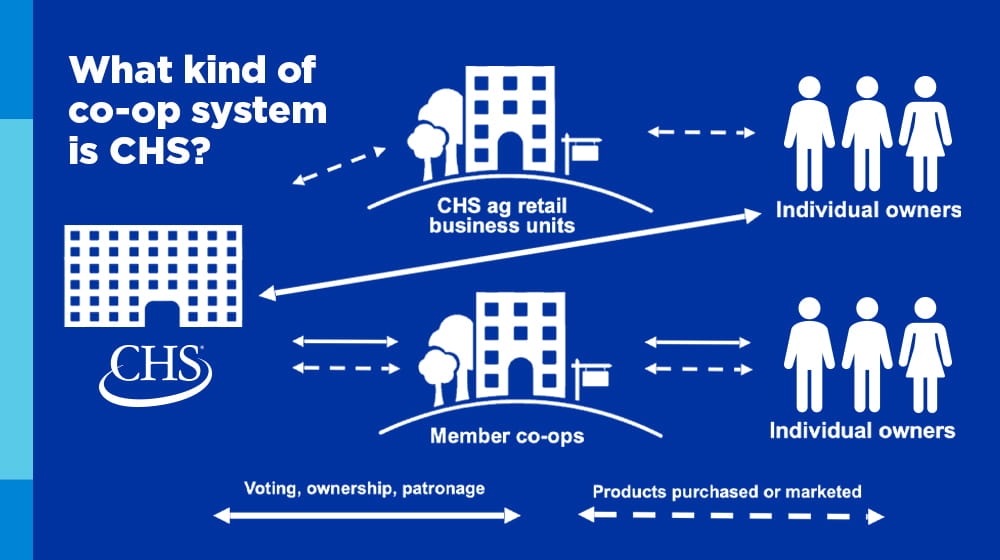
What kind of co-op system is CHS?
CHS is a blended federated and centralized cooperative system. CHS is unique in that along with the federated system of member cooperatives, the cooperative also has ag retail business units dedicated to serve farmer-owners in their respective geographies. Along with member cooperatives, those owners of ag retail business units vote for board members at the CHS Annual Meeting or are represented by delegates from their business unit at the annual meeting.
Who determines policy at CHS?
The CHS Board of Directors determines policy at CHS. The Board is made up of 17 member-owners from eight regions across the country. Board members are elected during the annual meeting.
How are profits distributed?
Cooperatives are operated for a profit. What makes co-ops unique is how the profit is divided. Unlike most corporations where the profits are distributed to stockholders, co-ops distribute profits to member-owners on a patronage basis. Patronage is a method of sharing profits among the members. It is based on how much they purchase and the profitability of the co-op.
Join us in celebrating National Co-op Month. Follow along on Facebook and Instagram for more stories and spotlights.


