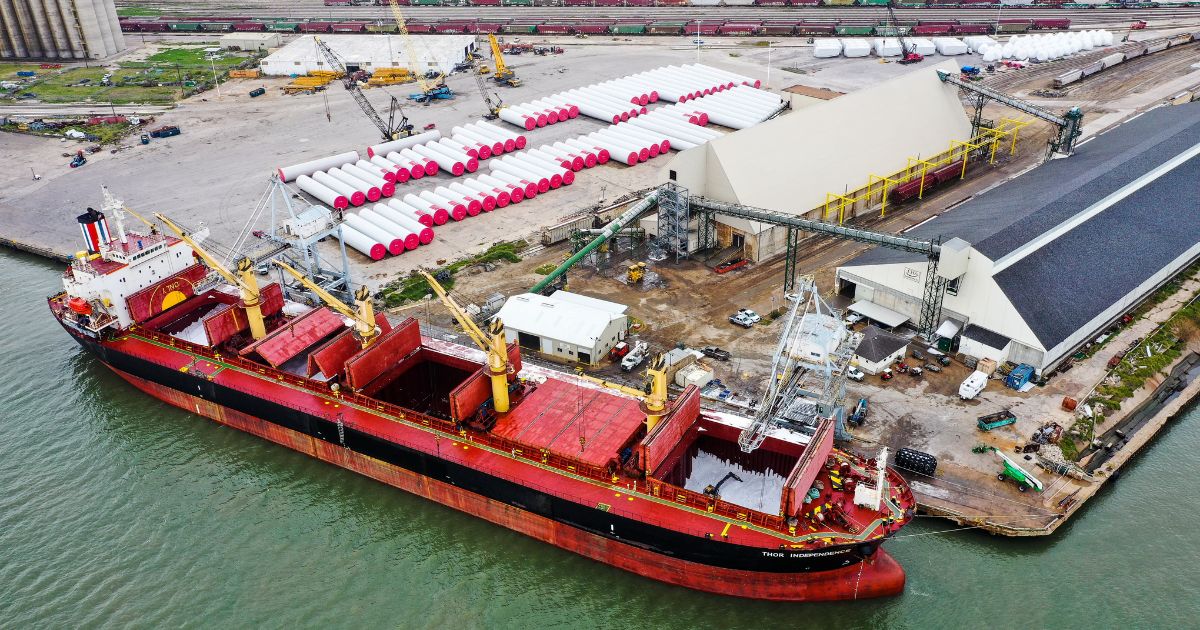
CHS recently completed the modernization of the Galveston deep water port, aimed at improving on-time delivery of imported dry fertilizer to farmers in the north, central and northwest part of the U.S. The Galveston port is a cornerstone of the CHS fertilizer distribution network that replenishes supplies to CHS ag retail business units and member cooperatives. Widely used urea products, including bulk and granular urea, are imported from sourcing partners as far away as Africa and the Middle East. From Galveston, fertilizer is loaded on rail cars destined for rail and river hubs, ultimately arriving through the cooperative system network on farmers' fields.
The improvements in Galveston, made in two phases over the course of two years, will reduce wait time for fertilizer, strengthen the supply chain and deliver a more efficient experience for customers. Upgrades replaced outdated conveyor systems, tripling rail car loading speed from 400 to 1,200 tons per hour.
“CHS sources and supplies more than 9 million tons of fertilizer annually to and through the cooperative network,” says John Griffith, executive vice president, ag business and CHS Hedging. “A key to our continued success is investments in our supply chain infrastructure to ensure our owners have access to essential crop nutrients when and where they need them.”
The first phase of the modernization project improved the loading system from warehouse to rail. Using new state-of-the art conveyors, crews can fill an entire train in one day versus three days with the old equipment. That positions CHS to dramatically increase dry fertilizer processing beyond the 450,000 tons per year it currently moves and helps meet growing demand for crop nutrients.
The faster turnaround also enables CHS to address quality control issues that can sometimes be a challenge when product is stored for any length of time in a warehouse. Product quality improved after the new conveyors went online and moved fertilizer more quickly.
“This modernization isn’t just about speed, it’s about flexibility and resilience,” says Roger Baker, vice president, trading and risk management, who leads the CHS crop nutrients product line. “By upgrading our systems, we can handle multiple product types and adapt quickly to changing market conditions. Our customers benefit from a more reliable supply chain and greater confidence that we’ll deliver what they need, when they need it.”
The newly-completed second phase of construction improves the movement of urea between warehouses, allowing for more flexibility in moving and storing cargo. The upgrade also means the port can now handle more than one type of cargo and stockpile it for efficient rail car loading.


