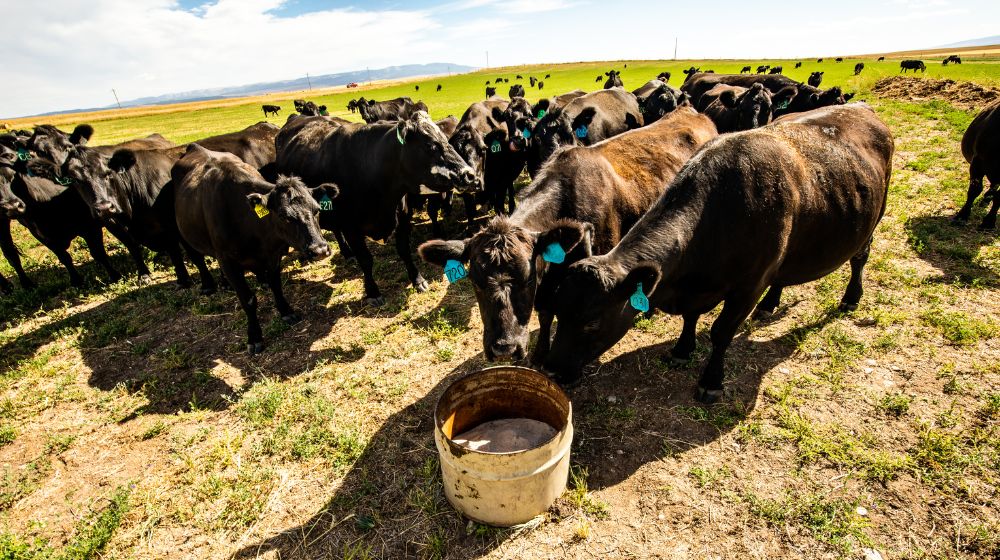
A good mineral program isn’t just another input. It’s one of the most economical ways to support herd health and strengthen long‑term profitability.
Trace minerals and vitamins are very important in all functions of the body all year round. From reproductive performance to immune response, consistent mineral nutrition can support cows and calves through every season and stage of production.
Because mineral needs can change throughout the year, consistency and bioavailability are important when evaluating a program. Availa® 4 trace mineral offers a highly bioavailable, consistent approach that supports reproduction, immunity, hoof health and calf performance, season after season.
Reproduction starts with proper nutrition
Calving is one of the most nutritionally demanding and stressful times in a cow’s year. And as every producer knows, profitability depends on cows breeding back on time.
An organic/chelated mineral program supplies highly bioavailable micro and macro minerals, along with key vitamins that support reproductive function. When cows are mineral‑deficient, producers often see:
- Lower conception rates
- More second‑ and third‑cycle calves
- Cows that fail to breed back entirely
Providing a consistent, high‑quality mineral program helps reduce one of the biggest obstacles to reproductive success.
Immune support producers can rely on
Healthy cows and calves don’t happen by accident. They start with proper nutrition.
Cattle offered organic/chelated trace minerals with high bioavailability may be better positioned to support normal immune function and respond to health challenges. This can mean:
Faster recovery from health challenges
Better resistance to disease
Less stress on cattle during high‑risk periods
Colostrum sets the tone for a calf’s life
Quality colostrum is critical to getting calves off to the right start. Without it, calves can struggle with health issues that follow them well beyond weaning.
Feeding an organic/chelated mineral program prior to calving can help support colostrum quality, allowing calves to receive important immune protection at birth. That early advantage often translates into healthier, more productive calves long term.
Hoof health matters
Foot rot and hoof issues can create challenges in every season, whether on summer pasture or during fall and winter feeding periods. These issues are frustrating, costly and time‑consuming.
Zinc and iodine play a key role in hoof strength and tissue repair. Adequate levels of organic/chelated zinc can help reduce the incidence of hoof rot. Fewer cases mean fewer treatments and less lost performance.
Proper mineral nutrition is one of the most practical tools available to support hoof health.
What to look for on a feed tag
Once producers understand the role minerals play in herd performance, the next step is evaluating whether a mineral program is formulated to deliver those nutrients effectively.
Zinc and copper balance
Zinc and copper work together, but balance is critical. Most nutritionists recommend a 3:1 zinc-to-copper ratio. When levels are too close together, these minerals can compete with one another and reduce absorption, meaning cattle may not get the full benefit.
Feeding rate
Feeding rate is another important factor to review. Lower feeding rates typically indicate a more concentrated formula, with higher ingredient inclusion rates on the tag. That means cattle can meet daily requirements with a smaller amount of mineral.
When comparing mineral programs, it’s important to look beyond bag price. Ingredient quality, mineral source and feeding rate all affect the actual cost per head per day.
Salt content
Salt has its place, but high salt levels in mineral aren’t always in the producer’s best interest. Paying premium prices for minerals that contain 25% salt or more may offer less return on investment. Offering salt separately allows cattle to meet their salt needs without over‑consuming mineral, and using salt to control intake can often cost more than it saves.
If you mix 50% mineral and 50% salt, it’s important to remember the vitamins and minerals are diluted. For example, a 2- to 3- ounce mineral feeding rate may become 5 to 6 ounce of total intake when mixed with salt to ensure cattle still receive the nutrients they need.
Understanding mineral forms
Evaluating the amount of mineral on a feed tag is important, but the source of those minerals matters, too. Cattle need to absorb trace minerals before they can use them, which is why bioavailability should be part of any mineral program discussion.
Oxides generally have low absorption rates while sulfates and chlorides offer improved availability. Providing organic/chelated trace minerals like Availa® 4 provides significantly higher bioavailability. These minerals are designed to enhance absorption and can be especially valuable when producers face poorer forage quality or higher levels of mineral antagonists such as selenium, iron, sulfur and molybdenum.
These minerals are bound to a carrier that helps them bypass the rumen and reach the small intestine, where absorption occurs.
Why Availa®
Availa® trace minerals are Zinpro® amino acid complexes, with one mineral bonded to one amino acid. This structure helps the mineral remain stable in the rumen, then break down efficiently for optimal absorption in the small intestine. This is an advantage over organic/chelated minerals with multiple bonds or bundles of sugar, which require a longer time to break down bonds and access the minerals—which in turn results in decreased absorption and higher loss of mineral in the manure.
Managing seasonal mineral intake
If cattle eat too much mineral in winter or too little mineral in summer, phosphorus levels may be the reason. Cattle naturally adjust intake based on phosphorus needs:
- Green, growing summer grass is typically high in phosphorus (12-3+ or 12-6+ formulas)
- Dormant fall and winter forage are low in phosphorus (12-6+ or 12-12+ formulas)
That’s why no single mineral works well year‑round. Seasonal mineral adjustments can help ensure intake stays consistent while meeting nutritional needs.
If mineral intake is inconsistent, producers may need to evaluate several factors, including salt content, phosphorus level, water quality and the number of tubs or mineral stations available per head in pasture. In some cases, adjusting the formula or changing the number of mineral stations can help improve intake consistency.
Just because cattle are not eating mineral doesn’t mean they don’t need it. Trace minerals and vitamins are very important in all functions of the body year-round. A formula change may be all that is needed.
The takeaway
A solid mineral program is a foundation for healthy, productive cattle. Availa® 4 trace mineral offers a consistent, highly bioavailable option designed to support cows and calves through every season and stage of production.
For help evaluating mineral options, contact your CHS animal nutrition representative.


