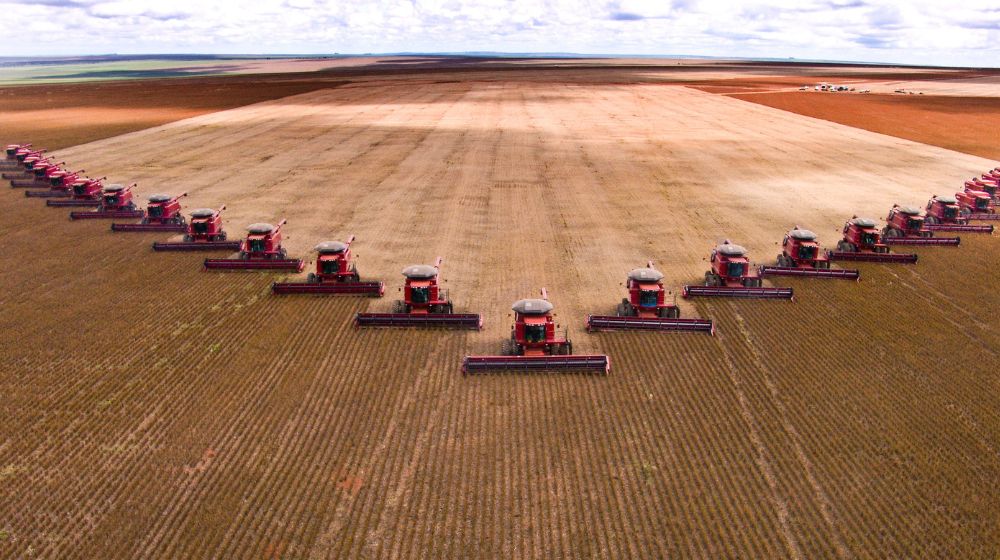
Eighty years ago, Brazil was an agricultural underdog. Today, it’s a global player in soybeans, corn and biofuels. What’s behind this transformation?
“Whenever we tell the story of Brazil, it starts with what they didn’t have,” says Chris Pothen, CHS senior vice president, international. “They had limited domestic oil production and faced growing energy import needs. So, when the world started consuming fuel in a big way, Brazil had to find an alternative.”
That alternative was ethanol, and Brazil committed early. As far back as the 1930s, the country invested heavily in sugarcane-based ethanol, creating a foundation for energy independence and agricultural growth. Ethanol became part of Brazil’s identity. Today, flex-fuel vehicles are the norm, and ethanol blend mandates are clear and consistent.
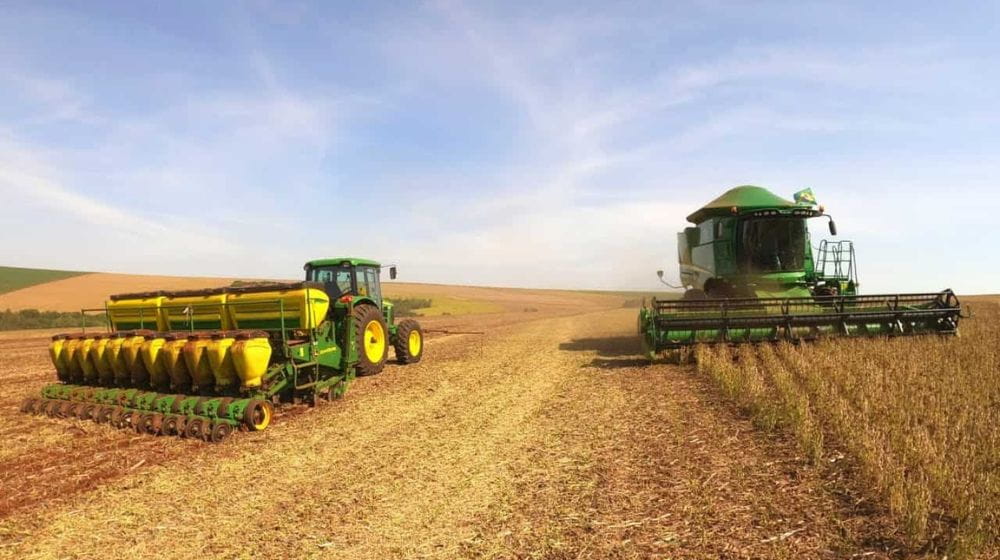
But ethanol was just the beginning. Brazil also had something else: land and climate. While its soils aren’t the deep black loam of Iowa, Brazil’s vast acreage, abundant rainfall and tropical sun allow for two crop cycles per year. “That leverage—planting soybeans in September and harvesting in January, then planting corn right behind—makes Brazil competitive,” Pothen explains.
The final catalyst? China. When China joined the World Trade Organization in 2001 and its middle class began eating more protein, soybean demand significantly increased and Brazil was ready. Farmers who once grew crops in the south sold land and bought 10 times as much in the north, waiting for the right economics to plant.
Over the last 20 years, Brazil has converted more than 100 million acres of land through agricultural expansion according to MapBiomas, which documents long-term land-use change. To put that into perspective, the total land converted is larger than the area often defined as the U.S. corn belt.
And they’re not done. “There’s still another 50 to 55 million acres of pastureland that could be converted to cropland over time,” Pothen says. “Many analysts expect a significant share of future acreage the world grows to occur in Brazil.”
As Brazil’s agricultural footprint expands, environmental regulations, sustainability standards and market expectations will play an important role, shaping how and where new acres are developed.
Challenges and advantages
Brazil’s rise hasn’t been without obstacles. Infrastructure remains a major challenge. “I’ve seen vessels wait 100 days to load at the Port of Santos,” Pothen recalls. “Farmers drive 300 miles on dirt roads to reach a rail loader, or they skip rail entirely and drive 1,000 miles to the port.”
These inefficiencies lower farmgate prices and spur innovations like corn-based ethanol plants in Mato Grosso, which reduce freight costs by processing corn closer to where it’s grown.
Despite these hurdles, Brazil’s production has increased due to lower land costs and year-round farming that reduce per-unit costs, even as input prices fluctuate. Growth has also been fueled by the government's strong biofuels policy.
“Brazil has generally set clear national biofuel blend targets and maintained a relatively consistent policy framework,” says John Griffith, CHS executive vice president, ag business and CHS Hedging, of the country’s ethanol and biodiesel blend levels that have at times approached E30 and B15. “That predictability helps support investment.”


