
Economic growth and demographic shifts across Latin America are driving increased demand for U.S. agricultural products, opening new opportunities for American producers.
Mexico became the No. 1 export destination for U.S. ag products in 2024, with a record $30.3 billion in purchases, according to U.S. Department of Agriculture (USDA) data. Colombia is the second-largest market for U.S. farmers in Latin America and ranks seventh worldwide, spending $4.38 billion in 2024.
U.S. ag exports are also on the rise to Guatemala, Ecuador, Honduras, El Salvador, Panama and Nicaragua. On average, those eight countries increased purchases of U.S. ag exports nearly 6% annually from 2015 to 2024, USDA data shows.
“Latin America is a reliable market for U.S. ag products, and we expect that to continue,” says Diego Gavilanez Hernandez, a regional CHS marketing expert. “The U.S. has done a good job securing demand as competition for market share stiffens amid production increases in other countries.”
Demand drivers
Why are corn, soybean, wheat, soybean meal and distillers dried grains with solubles (DDGS) exports on the rise to Latin America? Bryce Banfield, vice president of international sales with CHS, says all emerging markets have similar demand drivers.
“Latin American populations are growing. And they are all going through similar growth in regard to disposable income, which drives increases in consumptive demand,” he says. “Diets change; people are eating more meat proteins and more refined flours in different types of bread.”
Livestock production – primarily pork, beef and poultry – is growing in Latin America to meet the demand for protein and that requires more feed grains and byproducts, Banfield explains. In Mexico, pork and beef consumption is projected to increase 4% and 7%, respectively, in 2026 from 2025 levels.
“Hog and poultry barns in Mexico are amazingly large and modern – in some cases more so than in the U.S.,” says Brian Schouvieller, senior vice president of ag product lines with CHS. He adds he’s amazed at the integration and modernization that has occurred in the Mexican livestock industry since he worked in the country more than a decade ago.
Wheat exports are also on the upswing in Mexico, as flour mills ramp up production.
“The main drivers behind the growth in [U.S. ag] imports are rising domestic consumption and stagnating national [crop] production,” says Guillermo Gomez, co-owner of Grupo Trimex, Mexico’s largest flour milling company. “In addition, most infrastructure investments in Mexico over recent decades have focused on the rail system and its integration with North America, which favors the United States as a supplier by providing more competitive pricing compared with other exporting countries that do not share a border with Mexico.”
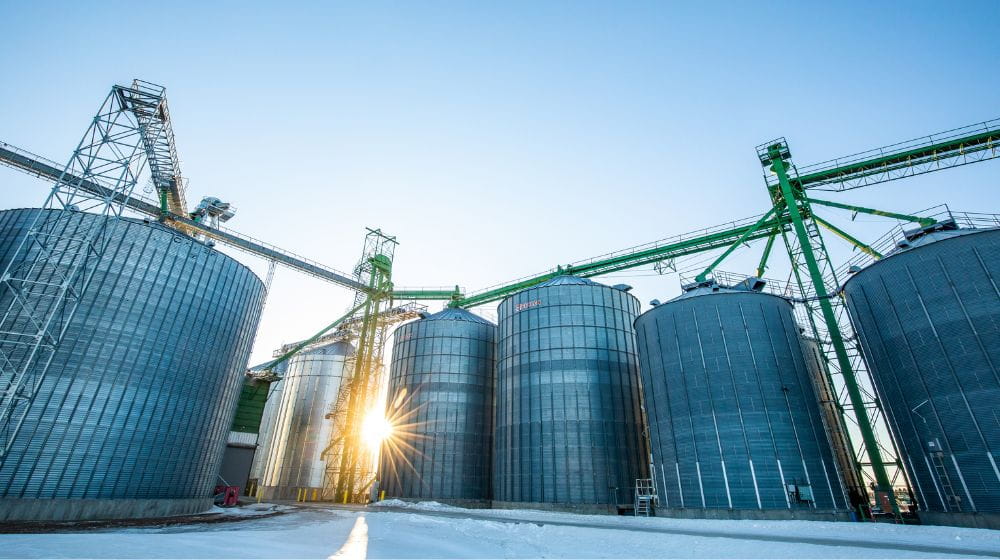
Rising demand for U.S. agricultural products across Latin America keeps soybeans and other crops moving through global supply chains.
Economics and demographics tell the story
Mexico and Colombia – the two largest buyers of U.S. commodities in Latin America – illustrate how economics and demographics shape demand.
Mexico’s population is projected to increase from 132.8 million in 2025 to 155.4 million in 2060, according to the U.S. Census Bureau. The country’s per capita gross domestic product (GDP) in 2026 is just over $15,000, compared to $9,000 in 2016, International Monetary Fund data shows.
“Mexico’s middle class is growing. Dietary habits are improving … there’s a lot of [grain export] upside,” Schouvieller says.
The economic scenario is similar in Colombia, he continues. Per capita GDP is projected at $8,640 in 2026 compared to $6,000 10 years ago.
USDA data shows ag exports to Colombia reached a record $4.5 billion in 2024, up 21% year over year. Corn was the top U.S. ag export in 2024 at 6.98 million metric tons (275 million bushels), followed by soybean meal at 1.52 million metric tons. Exports of both commodities jumped 97% and 106% from 2015 to 2024, respectively.
The growth was also driven by higher demand from Colombia’s animal food industry and trade preferences under the U.S.-Colombia Trade Promotion Agreement, according to the USDA.
USDA data shows Guatemala is the largest Central American market for U.S. ag products, totaling $1.9 billion in 2025, up 15% from the previous year. The nation’s population and per capita GDP are trending up dramatically, too.
“Latin America is one of the few regions in the world that continues to grow,” says Jason Marthaler, oilseed product line leader with CHS. “That’s why we’re focusing attention there – to build a strong customer base, which is critical to serve our owners every day.”
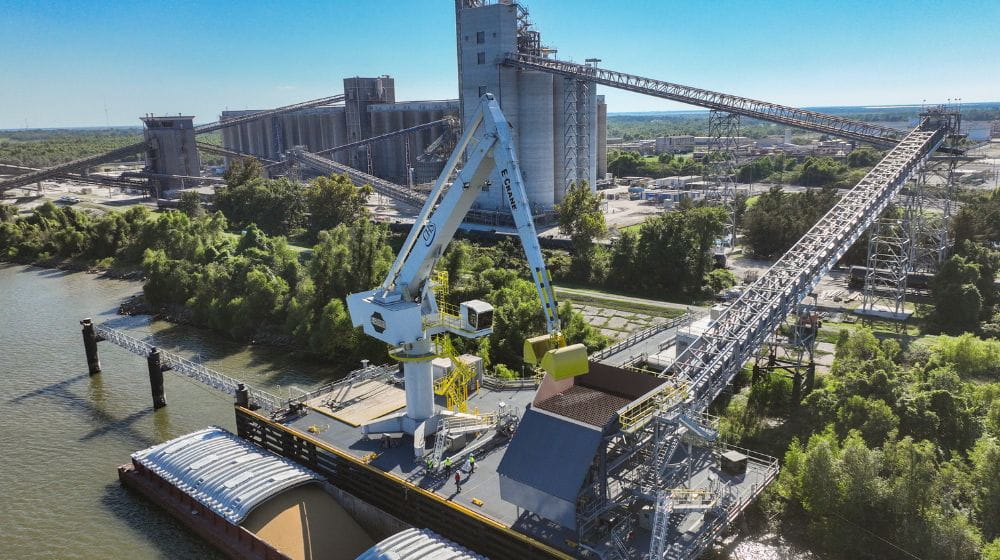
An electric-powered crane, or E-Crane, is one of many recent improvements at CHS Myrtle Grove as part of upgrades to increase export capacity by 30%.
Bright future
To meet growing demand, CHS and its member cooperatives have made strategic investments in grain origination and export facilities, strengthening the end-to-end supply chain.
“With [CHS and member cooperatives’] capabilities and assets, we are ready to efficiently serve more customers in Latin America,” concludes Gavilanez Hernandez, “and I believe our volumes will continue to grow.”


