The No. 1 rule in real estate is “location, location, location.” The same is true regarding the grain business.
Just as a home’s value often hinges on its proximity to schools, shopping, workplaces and entertainment, grain suppliers benefit from having export assets strategically located in key production regions and close to customers.
“Geography is destiny,” says Chris Pothen, senior vice president of international business with CHS. “Our customers demand that we have products available 365 days a year. To do that, we need to be where the crops are grown and expand our speed and space in key international locations.”
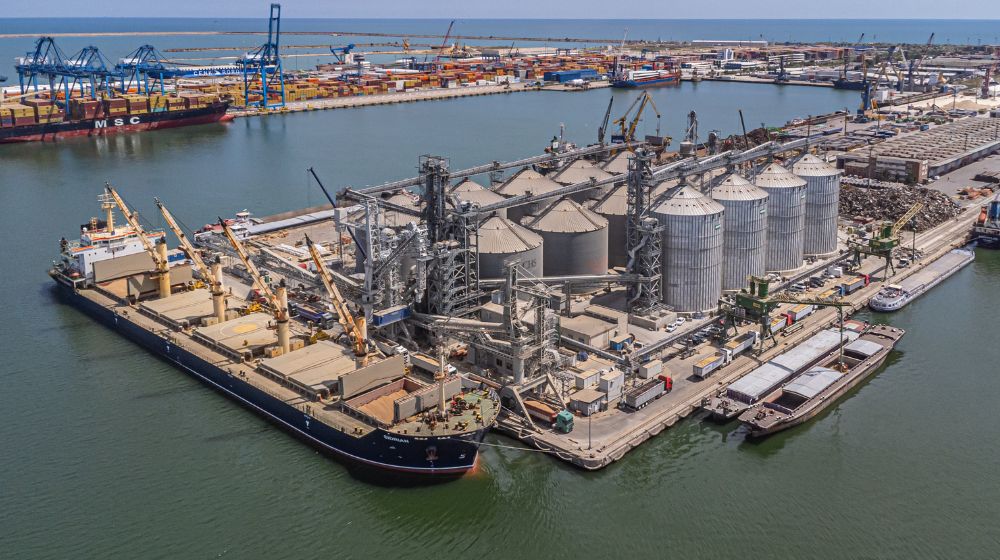
In the summer of 2025, CHS completed an expansion of its Silotrans export terminal located on the Black Sea in Constanta, Romania, to improve storage capacity as well as grain quality and handling capabilities. It’s part of the cooperative’s strategy to invest in grain origination and export facilities in the U.S. and around the globe to remain a relevant supplier and grow market access for CHS owners.
Why the Danube River corridor matters for grain sourcing
Silotrans is ideally located in the heart of the fertile Danube River corridor. It sources corn, wheat, barley and canola from Romania, Hungary, Serbia and Bulgaria.
Crop yields in the region are expected to increase over the next decade as farmers continue to improve soil health, adopt new technologies and embrace precision agriculture, according to cooperative officials based in the area.
With a stable population, Pothen says the region is poised to increase exports. “It’s an opportunity to catch the wave of growing wheat and corn production in the area.”
The terminal sits at the mouth of the Danube River where it flows into the Black Sea. The river is a critical transportation artery. One-third of the grain that arrives at Silotrans is delivered via barge, while trucks and rail equally transport the rest.
Grain is primarily exported to Europe, North Africa, the Middle East and Asia. Many customers in those regions can receive grain shipped from the terminal in days compared to weeks from the Americas, which lowers transportation costs.
How speed and space improvements drive grain capacity
Pothen says Silotrans often operated at max capacity in recent years.
“We never expected export volumes to hit 2 million metric tons [former annual export capacity], and we’ve done that multiple times now since CHS acquired the facility in 2011,” he adds. “We needed to increase its capacity to handle growing supply and demand.”
Upgrades include:
- A 40% increase in storage capacity to 140,000 metric tons (more than 5 million bushels)
- Improved technology enabling faster unloading for multiple products simultaneously
- Additional ship loading capabilities including a new 1,500-metric ton-per-hour ship loader
- Doubled intake capacity through a new 800 metric ton-per-hour rail and truck dump pits
- The ability to improve grain quality through a new gravity screener
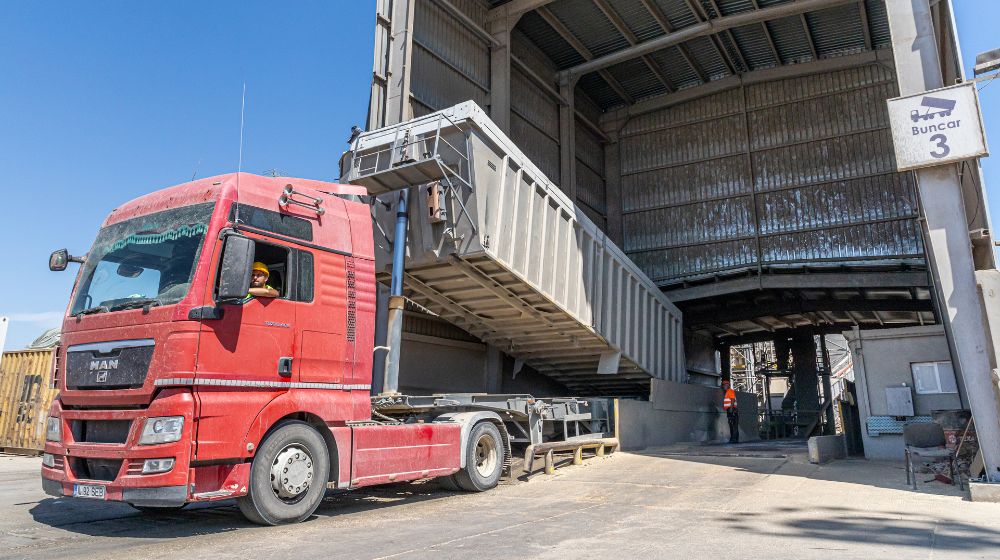
The Silotrans expansion will support up to a 30% increase in annual export volumes.
The improvements have significant impacts on Silotrans’ ability to serve customers around the world. “We can now load a Panamax ship with grain (60,000 to 65,000 metric tons) in 2 to 2 ½ days instead of five, which reduces costs and increases the competitiveness of our grain,” says Alexandru Damoc, senior director of operations at CHS Silotrans. Additional benefits from the expansion include improved grain quality and more capacity to better meet certificates of origin and other specific requirements from customers.
Enhancing performance by moving grain through Silotrans
Bryce Banfield, vice president of international sales with CHS, sees the increased efficiency and proximity to key customers in the Mediterranean basin as an opportunity to export more grain from Silotrans.
“A lot of buyers have moved to just-in-time inventory management. Originating grain from a port with only a six-day sailing time to Spain, for example, compared to 30 days or more from Brazil, allows buyers to better manage inventories and lower transportation costs,” Banfield says.
One such customer is Henrique Comprido, an agro-commodity trader with Reagro, a leading livestock feed and crushing company based in Lisbon, Portugal. The company sources a portion of its corn, feed wheat and barley needs from Silotrans. It also buys soybeans from CHS.
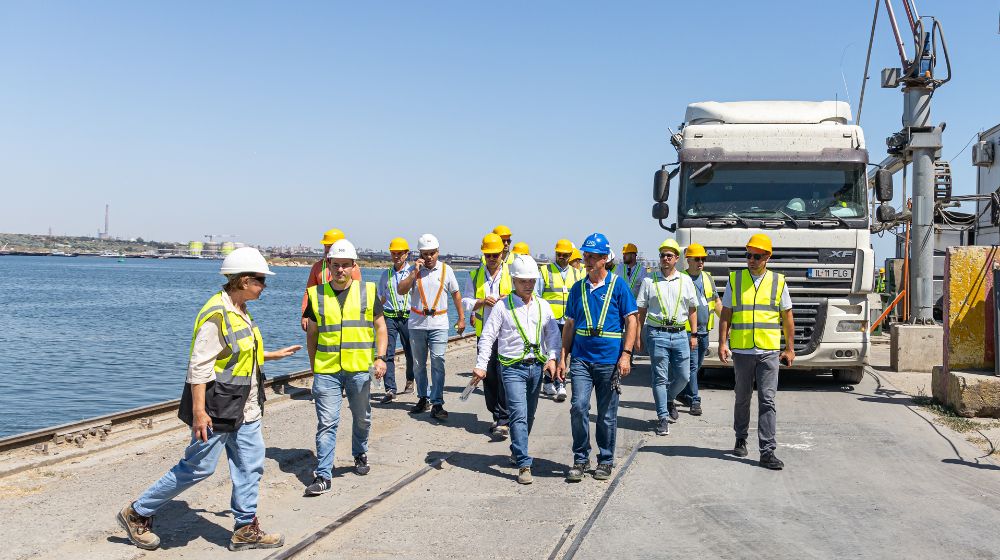
Comprido toured CHS Silotrans with other grain buyers shortly after the facility expansion was completed in 2025. Comprido, along with other buyers, liked what they saw. For him, Silotrans’ ability to load grocery boats and to load grain quicker with less broken kernels that minimizes potential problems with mycotoxins is a game changer.
“With increased capacity, we expect to load more products from Constanta with CHS,” Comprido says. “We appreciate the flexibility in logistics, which makes a noticeable difference in our business.”
CHS as a year-round supplier of grain
CHS supplies grain to customers throughout the year, even as grain from one region of the world may not be plentiful or competitive. With the cooperative’s global footprint and market access, CHS can supply commodities to customers from other parts of the world.
Pothen says farmer-owners benefit from the cooperative’s end-to-end global supply chain.
“Trade flows are dynamic and change,” he continues. “When margins are stressed in one part of the world, they won’t be in another part, and we’re able to capture that for our owners. Investments in port facilities, like Silotrans, historically generate strong returns.”