‘Old habits die hard,’ as the saying goes — but a sweeping shift in food preferences is transforming diets across many developing countries. These changes are influencing not only what ends up on the dinner table but also how global trade flows are evolving. CHS is closely tracking these trends as it strengthens its global grain strategy and supports the cooperative system.
What’s driving the shift?
Rising incomes, expanding populations and rapid industrialization are reshaping consumer behavior in emerging markets. According to the USDA Economic Research Service, as household income grows, consumers spend more on proteins, dairy and processed foods. That shift increases demand for grain used in both food and animal feed.
CHS is focusing on three regions where economic growth and changing diets are accelerating: Southeast Asia, Latin America and North Africa. Diversifying trade in these markets is essential for maintaining strong U.S. agricultural exports and a resilient supply chain.
“Southeast Asia, North Africa, Central and Latin America are the markets that we’re working with on behalf of the cooperative system to find new demand,” says Gary Halvorson, executive vice president of enterprise customer development at CHS. “World Bank statistics show China’s population growth will slow over the next 20 years. Based on that trend, the USDA forecasts trade with China, our largest buyer of U.S. soybeans, will level off. It’s crucial that we find new business to grow and strengthen the cooperative.”
Southeast Asia: A rapidly expanding middle class
More than three‑quarters of the next one billion people entering the global middle class will live in Asia, according to the World Data Lab. In Southeast Asia alone, GDP is projected to grow 28% in the next four years, pushing two‑thirds of the population into the middle class. With rising incomes, consumers are shifting from staples like rice and vegetables toward proteins, dairy and processed foods, the Food & Agriculture Organization reports.
“If you look at Southeast Asia, there are bakeries everywhere at the moment because they’re spending money on to‑go foods,” says Bryce Banfield, vice president of international sales at CHS. “And they’re consuming more wheat flour because of that. They’re also consuming more proteins, which increases demand for grain.”
Vietnam is an important trading partner for U.S. farmers. The country accounts for 30% of all imported goods in Southeast Asia and is expected to add 3 to 4 million people to its population in the next four years. The USDA projects that Vietnam’s imports will grow at twice the rate of other Southeast Asian countries, with corn and soybean meal leading demand.
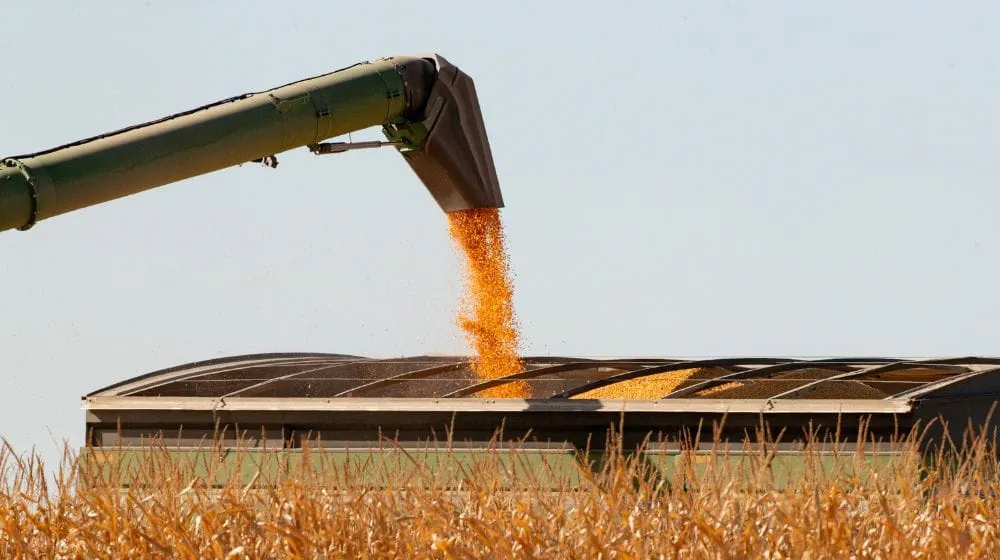
Mexico is the top export market for U.S. corn.
Latin America: A thriving cattle industry fuels grain demand
Latin America is another key growth region, with Mexico emerging as the largest importer of U.S. grains and oilseeds in the region.
Manufacturing expansion, driven in part by companies relocating from China in search of lower labor costs, has boosted Mexico’s GDP by 65% between 2019 and 2024. With more disposable income, consumers are buying more meat, poultry, dairy and processed foods, all of which increase demand for U.S. grain.
Mexico is now the largest buyer of American wheat, purchasing more than 90 million bushels in the past year. It is also a top market for U.S. corn, supported by a strong cattle industry. The USDA projects Mexico’s beef production will grow 25% and pork production 24% by 2033. Based on that data, CHS expects feed grain exports to Mexico will remain strong.
“Mexico currently consumes 1.2 billion bushels of grains and byproducts for cattle feed. Based on USDA data, demand for imports could grow if grain production doesn’t increase across the country,” says Banfield.
Colombia is another strategically important market. Sixty percent of Colombia’s grain imports come from the U.S., making it the second‑largest buyer of U.S. commodities in Latin America. Growing demand for animal proteins and a heavy reliance on U.S. corn — 270 million bushels annually for poultry and livestock feed — continue to drive strong trade.

Wheat imports to North Africa have increased 77% over the past 20 years.
North Africa: Population growth and urbanization increase imports
North Africa is becoming increasingly influential in global grain trade as population growth and urbanization outpace local agricultural productivity. The region benefits from international ports, stable governments and financial stability, but domestic grain production and GDP growth are not keeping up with demand.
Egypt and Morocco are emerging as food manufacturing hubs. Egypt, already the world’s largest wheat importer, has increased wheat imports by 77% over the past 20 years. The country has also doubled its corn imports and now accounts for two‑thirds of all soybean purchases in the region.
“North Africa is taking in grain, processing it and re‑exporting it,” says Halvorson. “Egypt is sometimes referred to as the ‘mother of Africa.’ In other words, Egypt will help Africa flourish. Egypt’s privately owned companies are manufacturing grain for food‑insecure regions of the continent.”
New opportunities for the cooperative system
Shifting diets and demographic changes are creating new opportunities for U.S. grain exports. CHS is investing in infrastructure and global partnerships to meet this rising demand while strengthening the cooperative system.
- A new CHS Broadbent export facility opening soon in Geelong, Australia, will support wheat, dairy and beef‑driven demand in Southeast Asia.
- Investments in ports like Myrtle Grove are reinforcing supply chains in Latin America to meet rising demand for wheat, dairy, proteins and feed grains.
- The expanded CHS Silotrans terminal in Constanta, Romania, has increased grain exports by 30%, with a portion directed to North Africa’s growing need for wheat, corn and soybeans.
Together, these investments position CHS and the cooperative system to support producers and meet the evolving needs of consumers around the world.